Rooted in Nature, Open to Surprise: Aaron Lelito on Wild Roof Journal

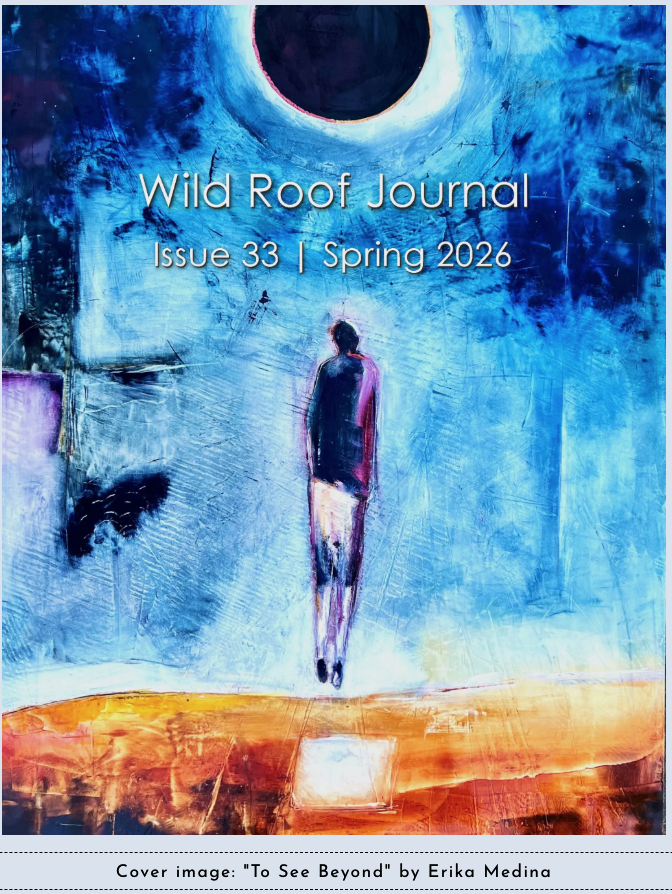
This month, we’re bringing you a conversation with Wild Roof Journal’s founding editor Aaron Lelito. Since its inception, Wild Roof has carved out a distinctive space in the literary landscape—one that celebrates nature writing in all its forms while maintaining an editorial vision that's both rigorous and welcoming. What began as Aaron's personal journey back to reading and creative expression has evolved into a thriving publication now in its 34th issue, recognized for its consistency, quality, and commitment to fostering genuine literary community.
In this conversation, Aaron shares the origins of Wild Roof Journal, his editorial philosophy, and what it means to build a publication that balances accessibility with substance. Whether you're a seasoned submitter or new to the literary journal world, Aaron's insights offer a refreshing perspective on what makes good writing resonate and how independent publications can create spaces where writers at all stages feel genuinely supported.
1. Can you share the origin story of Wild Roof Journal? What was the initial spark or
gap you were hoping to fill in the literary landscape?
There were a few sparks that got Wild Roof Journal started. The precursor to it all was
reconnecting with my love of reading. Back in 2018-2019, I was working as an English
professor, so I decided to make myself a reading list. I took a few authors I was interested in
and a few themes I wanted to explore, and mapped out all the books I was able to purchase or
download from the school library. And I ended up putting a pretty good dent in the list.
However, I wasn’t really making anything. I remember having a sense that I needed to do
something with all this reading. Through a bunch of creative experimenting and a few dead
ends, I recognized that what I was drawn to most, creatively, was nature. And initially, this
developed as visual expression with photography. Fast forward a bit, I then recognized that
showing off my own creative output had the unintended consequence of learning about the lit
mag world—navigating the submission process, brushing off rejection messages, and the
occasional thrill of getting something published. What became most appealing during this
time was connecting with other creative people and helping to support what they do.
It was a process that happened over a couple of years—exploring academic interests, getting
familiar with visual art, and stepping into the submission process for publication—
but there was one morning I remember, where the idea of creating my own lit mag popped
into my head! Being connected to people’s creative journeys has been an honor and a joy ever
since. What I appreciate most about the larger literary community is the sense of
interdependence that is cultivated.
2. How would you describe the kind of work that Wild Roof gravitates toward? Are
there particular themes, styles, or qualities that consistently catch your editorial eye?
Wild Roof Journal has a particular interest in nature and the environment, including the
intersection of “wild” nature and “civilized” society (which is to say that we do not entirely
consist of poems about trees and rocks but do think those things are cool).
I find that umbrella of “nature and environment” covers quite a wide range of subject matter,
however. Some types of work that are appealing might be called “hands in the dirt,” as they
express a direct, lived experience with aspects of the natural world. On the other hand, work
that explores the inner landscape of consciousness and the mysteries of the self is appealing,
too. Above all, the emphasis is on the quality of the writing, both in terms of a genuine voice
and stylistic craft.
What catches our eye is work that offers multiple layers, a depth and complexity that rewards
a reader who spends time with the piece. The counter-balance to that is our emphasis on work
that is accessible. An English grad student should find WRJ substantial enough to chew on
analytically, and a passionate poetry hobbyist should find WRJ relatable enough to mesh into
their everyday lives.
3. What does the review and selection process look like at Wild Roof? How do you
balance editorial vision with staying open to surprises?
I definitely want to stay open to surprises, whether that is first-time submitters or pieces that
challenge us as readers. The editorial vision for each issue is more of a loose template. Our
issues are presented in three galleries, and we have an admittedly subjective way of filling
them. Sometimes the pieces in a gallery have a prominent emotional impact, other times, lush
imagery, and other times, character-driven pieces stand out.
Back to the surprise element, these templates are loose enough to allow us to focus on the
quality of the submissions rather than considering how they’ll fit within the context of the
issue.
Our vision is to provide a welcoming environment based on collaboration and shared
interests (in other words, we’re not interested in a gatekeep-y ivory tower vibe).
4. You’ve now published multiple issues—how has your sense of Wild Roof’s identity
evolved since you started? Have there been any unexpected directions or discoveries
along the way?
We’re currently working on our Issue 34 for summer, so we’ve been around for a bit now.
What’s evolved the most is gaining visibility and credibility among our literary peers. I take
the unflashy elements of consistency and reliability very seriously, so when WRJ appears on
“best of” lists, “cool places to submit” compilations, or interview features like this, it is
incredibility validating, and I see it as a step toward being one of the top online publications
out there. And I’m grateful for it!
On that note, one example is that one piece we published (Sandie Friedman’s, “This Is
Josephine”) was selected by Diane Suess to be included in the Best Microfiction 2026
collection. After several nominations for yearly awards, this was our first winner.
It’s also great to see the quality of the work in our issues has continued to build. While I am
impressed with some writers new to publishing (which is awesome, welcome aboard to you),
I am also pleased to see established writers, whose work I have already encountered and am a
fan of, submit for publication.
Since beginning Wild Roof Journal, one unexpected direction was starting to write my own
poems and coming out with my first collection, The Half Turn, in 2023. I have a new poetry
collection in the works too. Additionally, a fun project that came about somewhat
unexpectedly is a collaboration with several WRJ contributors called If We: Connections
Through Creative Process , which combines handwritten notebook pages with nature
photographs.
5. What advice would you give to writers submitting to literary journals? Any do’s or
don’ts that come from your experience on the editorial side?
Do: Make submission files easy to work with. Use standard fonts, have clear titles listed,
provide a ready-to-publish bio statement.
Do: Consider including a variety of style or subject matter within a submission. Take chances
with what you include. Send your strongest pieces rather than try to anticipate what would fit
our tastes.
Don’t: Overdo special formatting or non-conventional layouts. While we do include pieces
with special formatting, there is a practical limitation to how many of them I can include in
an issue because of the extra effort involved with ensuring that the visual layout is
represented accurately on-screen.
6. What can readers and potential submitters expect from Wild Roof in the coming
year? Any new directions, special issues, or experiments you’re excited about?
One area I’m excited about is the opportunity to share more on the Wild Roof Journal
Substack. We have a running series of guest posts from our contributors that gives us
wonderful insight into their creative lives. Also, I love supporting new releases from friends
of WRJ—these can be excerpts of forthcoming books, interviews, or author commentary on
published work. It’s all a great way to be embedded in the literary community and to connect
with like-minded creators out there.
In terms of other possibilities for upcoming issues, I would like to have an issue that features
a guest editor, someone who has a hand in selecting and arranging the pieces for an issue. I
would also love to include poetry from a mainstream writer or two . . . some name
recognition! (Which, of course, would give a boost to the other writers included too. I’m
always looking out for the indie DIYers grinding away.)
Lastly, I’ll say that I’m open to new directions I haven’t yet considered. Creativity, and pretty
much the whole human experience, is fascinating, weird, and mysterious, and I do not believe
that creative pursuits are separate from the rest of life. I look forward to engaging with all the
ways people express their realities, their currents, pasts, dream worlds, fits of doubt, and
bursts of intuition.
Wild Roof is currently open for submissions. Visit wildroofjournal.com to read their latest issue, explore their Substack for contributor features and creative insights, and submit your own work. You can also follow them on social media @wildroofjournal to stay connected with their community.