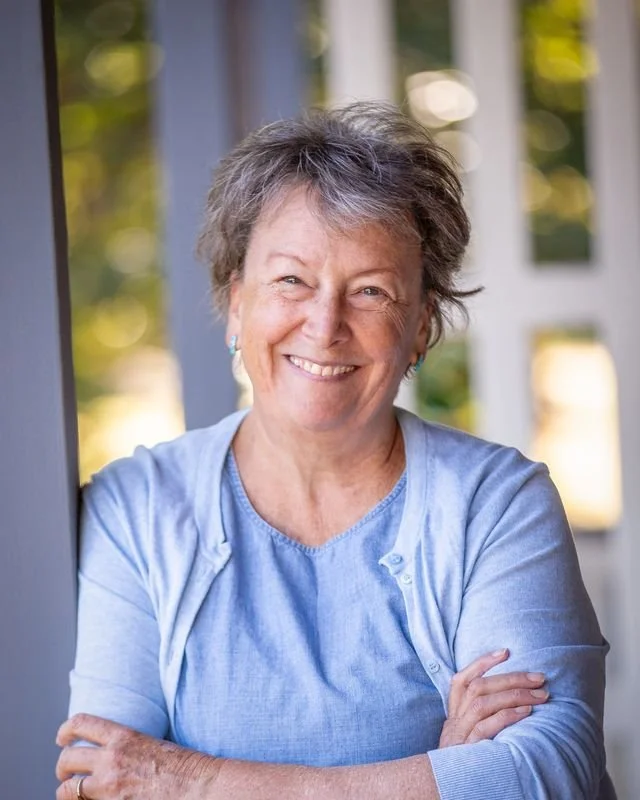
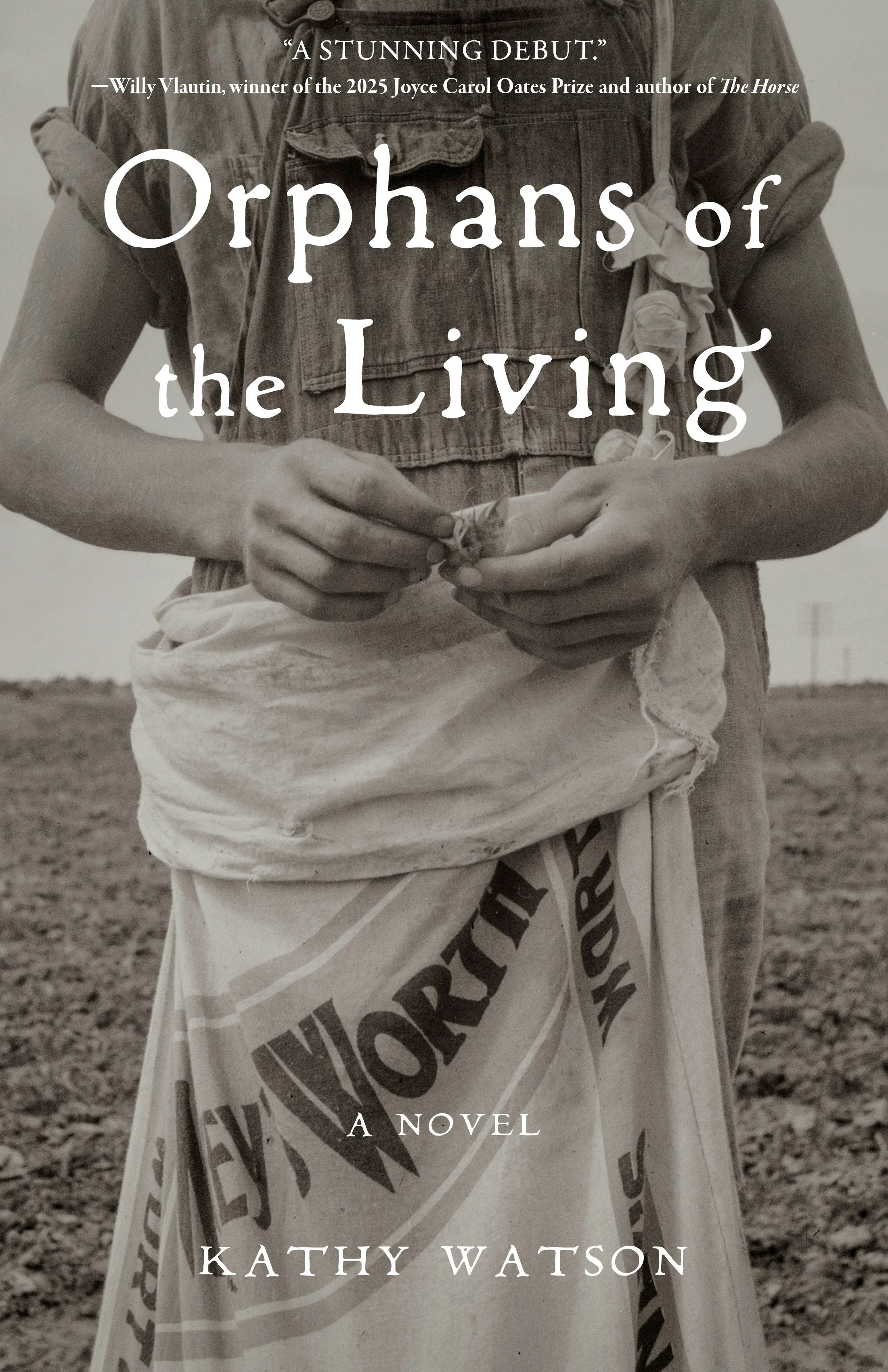
We’re honored to feature author Kathy Watson in conversation about her debut novel, Orphans of the Living (She Writes Press, 2025). Drawing on her mother’s family history, Watson has crafted a powerful work of historical fiction that follows the Stovall family through some of the most tumultuous decades of the early twentieth century—from the Jim Crow South to the Dust Bowl, through the Great Depression and into California’s promise of new beginnings.
The novel has garnered impressive recognition, including a 2025 Literary Titan Book Award Gold Medal and comparisons to John Steinbeck’s The Grapes of Wrath for its unflinching portrayal of hardship and survival. But what makes Orphans of the Living particularly striking is Watson’s ability to balance historical authenticity with deeply personal storytelling. This is autofiction in the truest sense—a work that is, as Watson herself notes, “fiction. It's also true.”
Orphans of the Living is available now at Waucoma Bookstore and online.
1. The title Orphans of the Living is striking. Can you talk about what that phrase means to you and how it shapes the book’s themes?
I discovered the term “orphans of the living” in the 1930 board meeting minutes from Twin Bridges Orphanage in Montana. As families flocked to Montana to take advantage of the Homestead Act, they soon discovered that the marginal lands they received couldn’t support a farm, let alone feed a family. Out of desperation, families placed their starving children in the state’s orphanage system, a kind of kiddie pawn shop. Parents hoped to return eventually and reclaim their children. Those were the “orphans of the living.”
Two of the Stovall sons were placed by an uncle in an orphanage there.
But as I researched and wrote, it seemed to me an apt description of all the members of the Stovall family: orphaned from each other, orphaned from health, financial stability, and a place they could call home.
2. Writing about family—especially one’s own mother—requires navigating both intimacy and distance. How did you approach this balance as you shaped the narrative?
I realized early on that balance was not possible. I was either all-in to find and tell my mother’s story, or I was merely using the Stovalls’ trajectory around the West as a handy set of built-in plot points in an interesting Americana story.
There were moments I could hardly keep going. I stood outside the outhouse where I knew my mother had been raped for a long time before I could go in and relive those seven minutes with her. A really long time. Weeks.
Distance? Yes, I attempted to be a classic omniscient narrator who brings an objective eye to the story. I’m not sure I succeeded. Even though I never met Lula, my grandmother, and only met Barney, my grandfather, once, I still loved them. I think readers will have to decide if I turned a blind eye to their faults, or was able to depict them truthfully as humans capable of delivering pain, dispensing love, and accepting redemption.
3. What was the spark that made you realize this story needed to be told? Was there a particular moment, document, or conversation that set the project in motion?
This story was brewing in my mind from my early childhood. I was a collector of stories even then, and the bits and pieces my mother told me, in her depressed, drug-addicted state, completely captivated me. I collected and filed those pieces away, year after year. I knew someday I wanted to tell the story, but how and when alluded me for a long time. My mother died in 2007, so many things unresolved between us. So much I could never ask her. In 2016, I read Michael Chabon's Moonglow, in which he fictionalizes his grandfather’s life, and even puts himself in the book as a character. It opened my eyes to how to tell the story, and I wrote it over a five-year period.
4. How did you conduct research for this book? Did you work primarily from family records, oral histories, imagination, or a combination of sources?
The Stovalls were not the sort of family whose papers and letters were gathered together in a university library. Nothing of a written record was created by them, that I know of, and certainly none, if it existed, was saved.
However, the newspapers of the time, known as “newspapers of record” added confirmation to the many bits and pieces my mother handed me: A news story of my grandfather leaving his farm in the San Joaquin Valley to go to San Francisco, which was surely the beginning point in his journey to raise bananas in Mexico. Legal notices in Montana newspapers of all the debts he owed there a decade later. A public notice in the Stone County Mississippi newspaper seeking the governor’s pardon of Ira Williams. A news story in the Modesto paper about Barney and Lula’s search for their lost son Glen. Newspaper sports coverage of Glen’s football games for the Army.
Ancestry allowed me to create a spreadsheet of all the family members’ births and deaths, and gave me access to documents, such as draft cards, that helped with their physical descriptions. Ancestry also gave me access to census documents, which helped me follow their trail over the years. Oh, and Barney’s trip to Mexico from San Francisco? Confirmed by Barney’s name on the manifest of the US Mexicana, which steamed into Galveston, Texas nine months later. That was another document I found at Ancestry.
With these bones, I could construct a skeleton. The flesh, especially dialogue, is pure imagination. And that of course is what earned the book it's “novel” handle. In fact, of all the pages of dialogue, there is only one pure line that I know to be true, when Glen confronts Barney in the barn, and Barney says, “Let's let bygones be bygones.” At least, as much as my mother can be trusted, Barney spoke that line. And she was there.
5. What were some of the challenges you faced in reconstructing your mother’s life and your family’s history? How did you handle gaps in the historical record?
The lack of Stovall records was freeing in a way. I could know that they were in a specific place at a specific time. I could know who was there, and perhaps the conditions in which they lived. The rest was research into the true events of the time. Oddly enough, I came to see my grandfather as a Forest Gump character, showing up in times and places that were important moments in the history of the Americas: He was in Pana, Illinois during the race riots that led to the creation of the NAACP. He was in Mexico as United Fruit, the largest corporation in the world at the time, employed Jim Crow tactics, well-known by the company’s Southern owners, to manage its work force in Central America. He was the only white sharecropper on a plantation in Mississippi as the final shreds of any equitable Reconstruction disappeared. He was there as hundreds of Black men and women, including several pregnant ones, were lynched.
Since I had little authentic details from the Stovall family, it was really important to me that I not color outside the lines of historical accuracy. That truth alone gives the story power, I think. I was careful to research any slang, or reference to art or music, to be sure it would have been used at the time. I wrote and researched concurrently, often coming to a point that was unclear to me, and diving back into historical research.
As to gaps in the historical record, I quite frankly depended on my characters, who I sometimes felt were winking at me, motioning to me, “Come this way.” What would Nora Mae have done next? Where would Glen have gone? There were many surprises, moments I stood back and watched what they would do next, and then wrote furiously to keep up.
6. What do you hope readers—whether they share a similar heritage or not—take away from your story?
While I am personally a proponent of living life in the moment, what I hope readers take away from this is that our present moment, especially the painful aspects of American life right now, did not just crop up in our lifetimes. Our parents and grandparents lived through racism, sexism, poverty, poor health, lack of education, a rapacious industrial class, a government with blind eyes. These are constants in our life as a nation. Will we ever make peace with our neighbors? Will we ever learn to grant our fellow citizens our blessing to live life as they choose? Will the gap between rich and poor continue to widen? There are days I despair. I hope seeing the long line of disparity passing through Orphans helps us, somehow, to keep working toward a just society.
7. Are you working on any new projects?
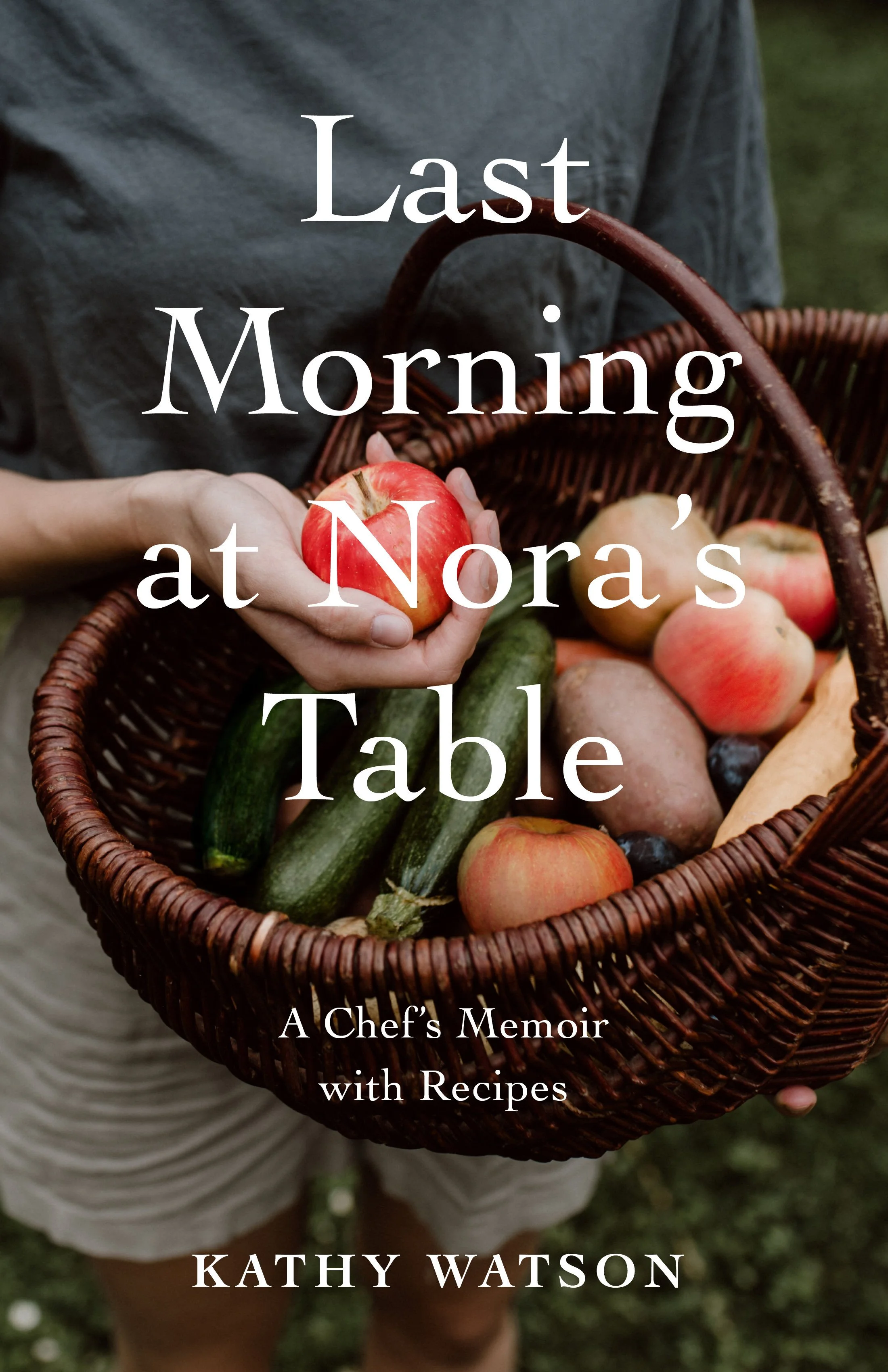
Yes! I have a second book, a memoir, that is in many ways a sequel to Orphans of the Living, coming out on February 7, 2027, also with She Writes Press, distributed by Simon and Schuster. It’s titled, Last Morning at Nora’s Table: A Chef's Memoir with Recipes.
I’m also at work on a third book, a novel, a near-future political thriller set in 2034, with a working title, Heart of the Monster.
8. What advice would you give to writers who are considering exploring their own family histories in their work?
I hate to see good stories lost, so if you have a great family story, tell it. Join Ancestry.com for starters, and begin to get a clear picture of your family. Read books that explore their time and place. And let a lot of that settle in your consciousness before you begin writing.
Don't be afraid to braid a story of fact and fiction. Who better to imbue the facts with story than you? You are a product of that history. In Britain, they have a genre for this called “Auto Fiction” which I think fits it perfectly. They have a little more fiction to explore than we do, right?